

Noida doctor says soaring school fees are draining families and hurting children’s future
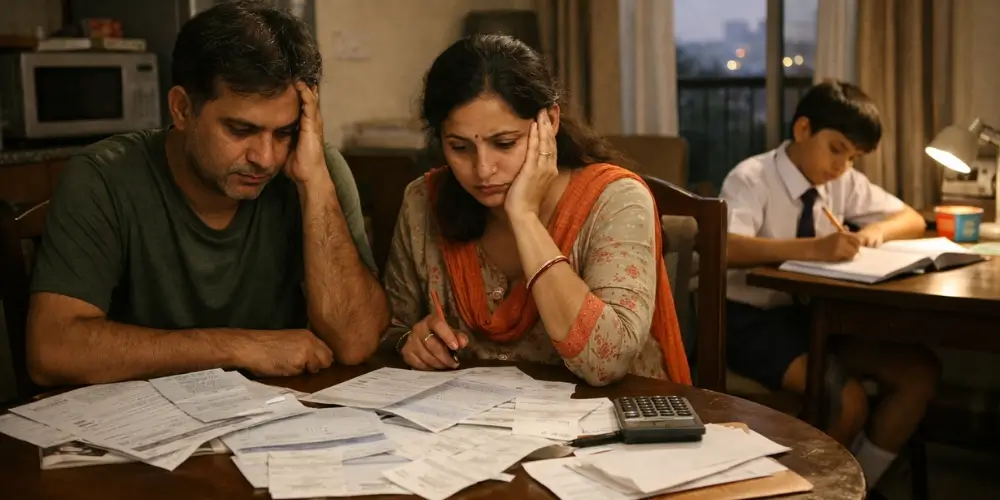
India’s urban middle class is facing a silent crisis. What was once considered the most secure investment — a child’s education — is now becoming a financial strain. Soaring school fees are pushing families into emotional, financial, and psychological stress, raising serious questions about the sustainability of private education in India.
As parents across our major cities, e.g. Noida, New Delhi, Mumbai and Bangalore, attempt to afford schooling, the issue of quality as a priority is no longer an issue; instead, the issue has now moved towards Parents being able to survive and pay to send their Kids to school.
Rising School Fees in India: More Than Just an Annual Hike
The problem of skyrocketing school fees isn't anything new, but it has started to create new challenges for parents within Indian cities relatively recently. A Noida-based doctor (Dr Shraddhey Katiyar) recently pointed out that the increase in school fees is having a tremendous effect on the way urban families live their lives.
Because of this, from his point of view, school fees now put a strain on more than just one's financial resources; they also require parents to demonstrate levels of perseverance, resilience, and emotional fortitude that they weren't required to before.
Parents are:
● Skipping family vacations
● Postponing home purchases
● Avoiding medical checkups
● Taking extra work shifts
● Delaying personal dreams
All to ensure that their child’s schooling continues uninterrupted.
This reflects a deeper reality: education inflation in India is outpacing income growth for many middle-income households.
School Fee Hike India: Are the Increases Justified?
One of the most debated concerns is whether the recurring school fee hike in India is genuinely justified.
Parents frequently question:
● Why do fees increase annually?
● Are teachers’ salaries increasing proportionately?
● Why are classrooms still overcrowded?
● Is infrastructure improving meaningfully?
The belief that private schools function more as businesses than as academic institutions is held by a large number of parents. In addition to promoting their excellent amenities heavily, these schools frequently do not have any improvements in the quality of their teachers or the student-teacher ratio.
This has intensified the perception of a growing private school fee burden.
Urban Families Financial Stress: The Hidden Emotional Cost
The financial strain is evident, but the emotional impact often goes unnoticed.
1. Lifestyle Sacrifices
Urban families adjust quietly:
● Reduced savings
● Minimal discretionary spending
● Delaying necessary medical care
● Cancelled holidays
2. Family Planning Decisions
For many parents, the cost of schooling in India now influences whether they can afford a second child. Education has become a major variable in family planning.
3. Silent Social Pressure
Parents often avoid speaking openly about fee stress due to:
● Fear of reputational damage
● Concern about children being targeted
● Social comparison within peer groups
This creates silent endurance rather than collective dialogue.
Education Inflation in India: When Learning Becomes a Luxury
Education is meant to be a ladder of opportunity. However, when soaring school fees link learning directly to financial capability, it risks widening inequality.
When schooling becomes unaffordable:
● Children’s confidence is affected
● Parents feel constant anxiety
● Academic focus shifts to financial stress
● Talent may go unsupported
If unchecked, school fee pressure on parents could reshape the demographic of private education, making quality schooling accessible only to those with strong financial backing.
Parents Speak: Profit Over Purpose?
Several parents across urban India express concern that:
● Schools prioritise infrastructure over teaching quality
● Luxury facilities are marketed more than academic outcomes
● Fee structures lack transparency
● Annual hikes lack a clear justification
The sentiment that “schools operate like businesses” is growing stronger.
While schools also face operational cost increases, there remains a need for transparency, accountability, and empathy in fee structuring.
The Cost of Schooling in India: A Structural Concern
The rising cost of schooling in India is not just an individual problem — it is becoming a systemic urban issue.
Key drivers include:
● Infrastructure expansion
● Branding and marketing costs
● Administrative overheads
● Technology integration
● Compliance and regulatory costs
However, without balanced oversight and structured support mechanisms, urban middle-class families may continue to absorb disproportionate pressure.
School Fee Pressure on Parents: What Needs to Change?
To protect children’s futures while ensuring schools remain sustainable, the following measures deserve attention:
1. Greater Fee Transparency
Clear communication on fee components and justification.
2. Regulatory Oversight
Balanced government frameworks to prevent arbitrary hikes.
3. Structured Payment Flexibility
Instalment-based or temporary support models during financial distress.
4. Community-Based Financial Support
Collaborative initiatives that help families navigate short-term crises without academic disruption.